




Bluetooth speakers have become a popular way to enjoy music without the hassle of wires. From house parties to travel playlists, wireless speakers allow users to stream music directly from their smartphones or laptops with minimal setup.
But behind this simple experience is a technology that plays a major role in performance: Bluetooth connectivity.
If you have ever experienced audio dropouts, limited range, or unstable connections while using a speaker, the issue is usually linked to how Bluetooth connectivity works.
Three important factors influence the wireless experience of a speaker: range, connection stability, and sound transmission quality.
Understanding these elements can help you choose among the best Bluetooth speakers available today and ensure you get the most reliable wireless audio experience.
How Bluetooth Connectivity Works in Speakers
Bluetooth is a wireless communication technology that allows devices to exchange data over short distances. In Bluetooth speakers, this technology allows your smartphone, tablet, or laptop to send audio signals wirelessly to the speaker.
Once a device is paired with the speaker, the Bluetooth connection continuously transfers audio data so music can play without interruptions.
Modern speakers use newer Bluetooth standards such as Bluetooth 5.0, 5.2, 5.3, and Bluetooth 5.4, which offer improvements in speed, connection reliability, and energy efficiency.
These advancements help modern speakers connect faster and maintain stronger wireless performance compared to older generations.
Understanding Bluetooth Range
One of the first things people notice when using wireless speakers is how far they can move away from the connected device while still playing music smoothly.
This is known as Bluetooth range.
Most modern Bluetooth speakers offer a range between 10 and 30 meters in open environments. However, the actual range depends on several environmental factors.
Walls, furniture, and electronic interference can weaken Bluetooth signals and reduce the effective connection distance.
For example, if your phone is in another room separated by walls or metal surfaces, the connection strength may decrease.
Newer Bluetooth versions improve signal transmission and help maintain stable connections even at longer distances, which is why many of the best Bluetooth speakers today use Bluetooth 5.3 or Bluetooth 5.4 technology.
Why Connection Stability Matters
Range alone does not guarantee a smooth listening experience. Connection stability is equally important.
A stable Bluetooth connection ensures music plays without interruptions, delays, or sudden disconnections.
Several factors affect connection stability:
• Bluetooth version used by the speaker
• Distance between the speaker and the device
• Interference from other wireless signals
• Hardware quality, such as chipset and antenna design
Speakers equipped with modern Bluetooth versions generally perform better in environments with multiple wireless devices.
This is one reason why many newer portable speaker brands focus on improving connectivity alongside sound quality.
How Bluetooth Impacts Sound Quality
Another common question people ask is whether Bluetooth affects audio quality.
Bluetooth speakers receive digital audio signals from the connected device and then decode those signals into sound using internal drivers and amplifiers.
Older Bluetooth versions sometimes decode limited audio quality due to slower data transmission speeds. However, newer Bluetooth versions support better audio codecs and faster signal transfer.
This means modern wireless speakers can deliver clear and powerful sound for everyday listening.
Of course, Bluetooth connectivity is only one part of the sound experience. Other factors also influence audio performance, including:
• Driver size
• Speaker tuning
• Enclosure design
• Bass enhancement technologies
Together, these elements determine how immersive and balanced the speaker sounds.
Bluetooth Versions and Their Impact
Bluetooth connectivity has improved significantly over time, and each version brings new advantages.
Bluetooth 4.0
Focused on improving power efficiency for portable devices.
Bluetooth 5.0
Introduced longer wireless range and faster data transmission.
Bluetooth 5.2
Improved audio streaming and device communication.
Bluetooth 5.3
Enhanced connection stability and reduced wireless interference.
Bluetooth 5.4
The latest version designed for more efficient communication, faster pairing, and improved device connectivity.
Speakers that support newer Bluetooth versions typically offer better wireless performance and more reliable streaming.
Modern Portable Bluetooth Speakers and Connectivity
Many modern portable speakers are designed to combine strong wireless connectivity with powerful sound output.
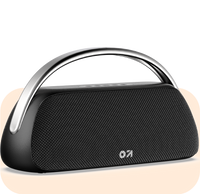
For example, speakers like the GoBoult Portable Bassbox Q10 feature Bluetooth 5.4 connectivity, allowing faster pairing and more stable wireless streaming from smartphones and other devices.
Similarly, speakers like the GoBoult Bassbox Q20 combine powerful 20W bass-boosted sound with portable design and Bluetooth connectivity, making them suitable for both indoor listening and outdoor use.
Devices like these show how newer Bluetooth technology helps improve the everyday wireless audio experience while keeping speakers compact and easy to carry.
Final Thoughts
Bluetooth speakers have transformed the way people listen to music by making wireless audio simple and accessible.
While design and sound performance often receive the most attention, Bluetooth connectivity plays a crucial role in shaping the overall experience.
Factors such as range, signal stability, and Bluetooth version all influence how smoothly a speaker performs.
As Bluetooth technology continues to evolve with newer versions like Bluetooth 5.3 and 5.4, the wireless experience will only become faster, more stable, and more reliable.
For users looking at the best Bluetooth speakers or exploring different portable speakers brands, understanding these connectivity factors can make it easier to choose the right speaker.


